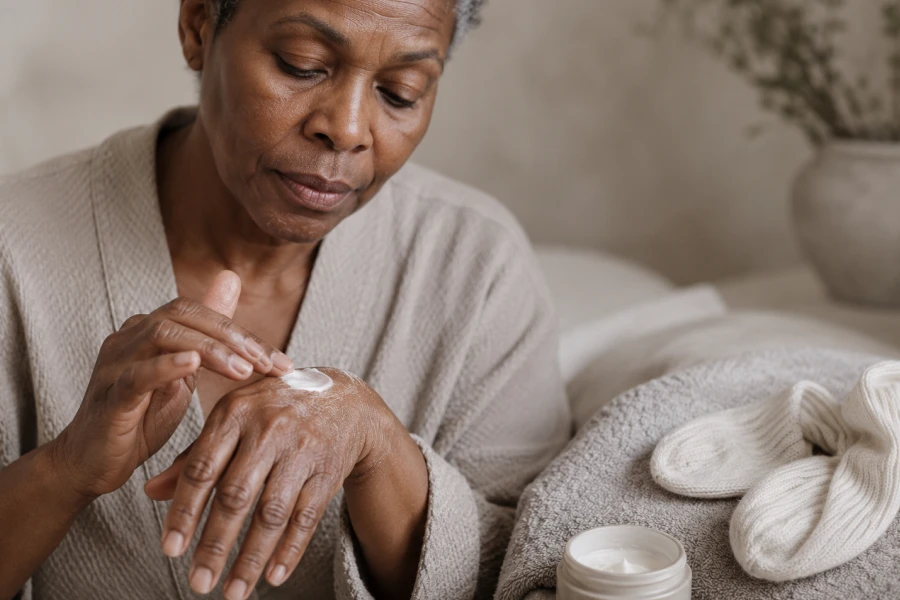
Extremely dry cracked skin can feel painful and discouraging. Heavy cream helps, but it is not everything. The routine must reduce water loss and friction. It also needs gentle cleansing and protection. Cracks often return when triggers stay unchanged. That is why strategy matters more than product amount. Skin needs moisture, softness, and a safer environment. Relief usually comes through repeated small steps. The process should feel careful, not aggressive. Comfort improves when care becomes consistent.
Cleansing can either support or sabotage recovery. Hot water may worsen tightness quickly. Strong soaps can strip fragile skin. Use mild cleansers on painful areas. Pat dry with a soft towel. Leave slight dampness before moisturizing. A deep hydration plan begins right there. Moisture works better before skin fully dries. This habit takes little time. It can still change comfort significantly.
Protection keeps cracks from worsening. Movement can reopen fragile splits. Friction from shoes or tools can aggravate skin. Cleaning products may sting and irritate. Gloves help during wet household tasks. Socks can cushion treated heels overnight. Covering painful areas may reduce rubbing. Avoid picking rough edges between treatments. Small protective choices matter every day. Healing conditions improve when stress decreases.
Rough skin often needs softening. Yet aggressive scrubbing can create more damage. Use ingredients that support gradual smoothing. Apply them only as tolerated. Pain is not a sign of progress. A cracked skin relief method should feel safe. Reduce frequency if stinging increases. Focus on consistency rather than intensity. Skin responds better to patient care. Softness builds when the barrier is respected.
Feet often crack because pressure is constant. Heels carry weight all day. Dryness combines with friction and movement. Treat feet after bathing or soaking. Apply moisturizer while skin feels slightly damp. Add a richer seal when needed. Wear breathable socks after treatment. Avoid walking barefoot on rough surfaces. Replace shoes that rub painful spots. Foot care improves when pressure and dryness are addressed together.
Hands face repeated washing and exposure. Sanitizer can sting compromised skin. Paper towels can feel surprisingly rough. Apply cream after every wash when possible. Keep a tube near sinks. Wear gloves for cleaning and dishes. A dry hand recovery rhythm works through repetition. Nighttime layers can support longer contact. Avoid fragranced products during painful episodes. Comfort improves when protection becomes automatic.
Some symptoms need medical attention. Bleeding cracks can become vulnerable. Swelling may suggest irritation or infection. Warmth, pus, or spreading redness matter. Severe pain should not be ignored. Home care has limits. Seek professional advice when symptoms worsen. Continue gentle protection while waiting for help. Avoid harsh experiments on broken areas. Safe care always comes before cosmetic goals.
A routine works when it fits your life. Place products where dryness happens most. Keep hand care near sinks. Keep foot care beside the bed. Use reminders until habits feel automatic. Track what improves comfort fastest. Remove products that sting repeatedly. A skin barrier support plan should feel doable. Small repeated steps beat occasional rescue efforts. That is how lasting comfort becomes realistic.


Leave a comment